
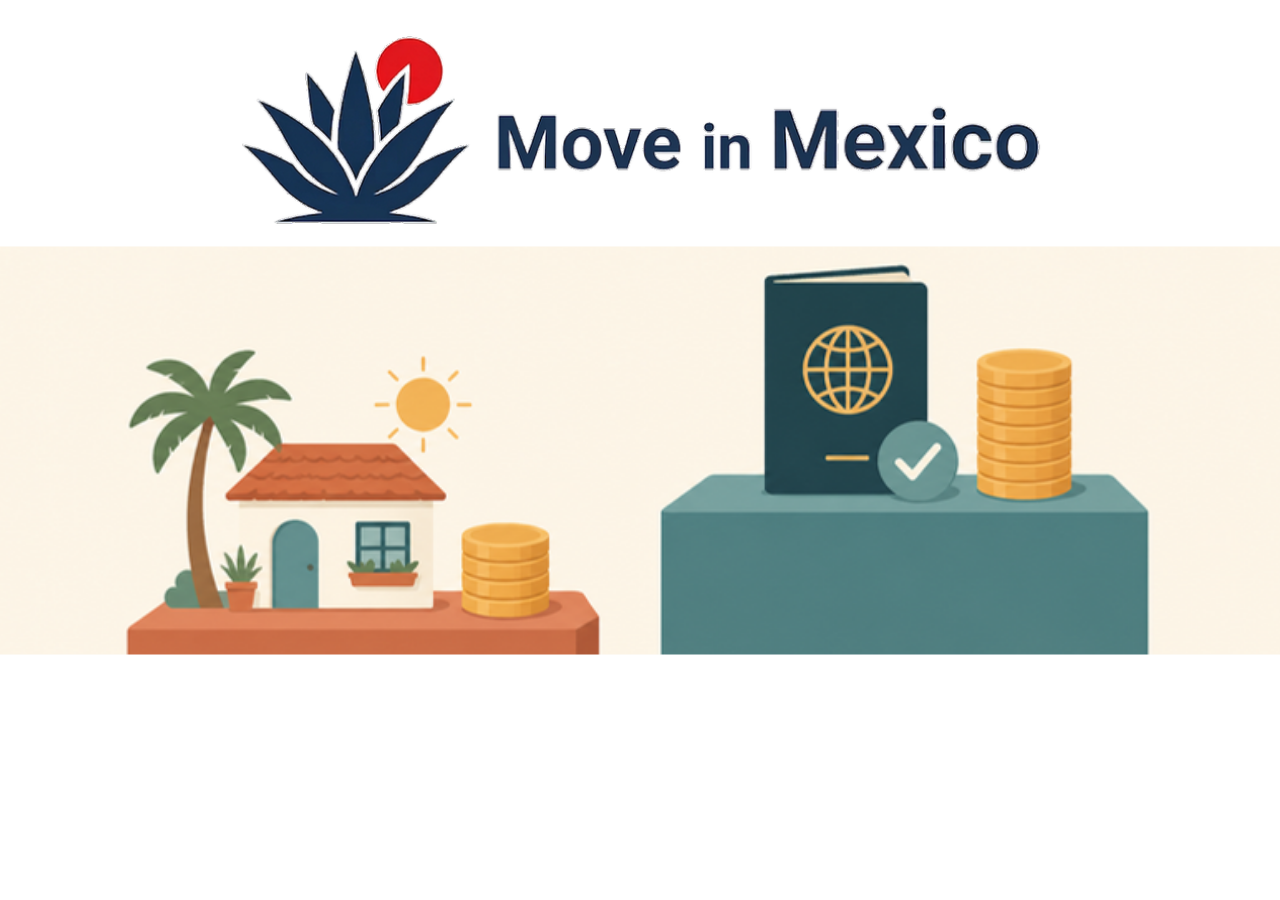
How Much Money Do You Need to Retire in Mexico? 2026 Budgets by Lifestyle
The real 2026 numbers to retire in Mexico: frugal, comfortable and luxury budgets by city, what a couple versus a single spends, and the figure most guides skip, the income or savings a consulate makes you prove for residency.
Updated November 2026
By Bruno Bianchi, CEO of Spainguru (225,000+ community members) · Updated November 2026 · 11 min read
Key takeaways
- A couple lives comfortably on about $2,800-$3,500 a month in mid-range cities like Mérida, Lake Chapala, Mazatlán or Oaxaca. Frugal inland starts near $1,800; luxury, coastal or Mexico City runs $4,000-$6,000+.
- A single retiree runs about 65-75% of the couple figure.
- There are two numbers to plan around: what you spend, and the income or savings a consulate makes you prove for residency. The visa figure can be the higher of the two.
- For 2026, a temporary resident visa indicatively needs net income of about $4,500 a month over the last 6 months, or savings averaging about $76,000-$80,000 over 12 months. Confirm the amount with your consulate.
- Mexican thresholds are set in UMAs and converted to dollars by each consulate, so quotes vary. Always work from your consulate’s own 2026 sheet.
On this page
- How much money do you need to retire in Mexico? The short answer
- The income floor: what a 2026 residency visa makes you prove
- Frugal budget: living lean in inland Mexico
- Comfortable budget: the mid-range expat life
- Luxury budget: San Miguel, Puerto Vallarta, the beach and Mexico City
- Retirement budgets by city (2026)
- What’s actually inside the budget: line items
- Will your income cover it? Social Security and pensions
- Frugal vs comfortable vs luxury: the annual totals
- Taxes and the fine print
How much money do you need to retire in Mexico? The short answer
A couple lives comfortably in Mexico on about $2,800-$3,500 a month, roughly $34,000-$42,000 a year, in mid-range cities like Mérida, Lake Chapala, Mazatlán or Oaxaca. Go frugal inland and you can start near $1,800 a month. Pick somewhere luxury, coastal or Mexico City and it climbs to $4,000-$6,000+ a month. A single retiree usually needs about 65-75% of the couple figure.
That is the spending answer. There is a second number people mix it up with, and it is the whole point of this page. You are really planning around two separate floors.
Your lifestyle floor is what you actually spend each month to live the way you want. The visa income floor is the minimum recurring income, or savings, a Mexican consulate makes you prove before it will grant a residency visa.
Residency requirements can run higher than your actual living costs. For a single person on one Social Security check, the visa floor is often higher than a frugal lifestyle costs, so you can afford the life and still miss the paperwork. I separate both floors below. If you want the full how-to on visas, healthcare and the move itself, that lives in our broader retirement guide, linked at the end.
Monthly at a glance
- Frugal couple, inland: about $1,800-$2,500.
- Comfortable couple, mid-range cities: about $2,800-$3,500.
- Luxury couple, coastal or Mexico City: $4,000-$6,000+.
Annual at a glance
- Frugal inland: about $22,000-$30,000 a year.
- Comfortable mid-range: about $34,000-$42,000 a year.
- Luxury, coastal or CDMX: about $48,000-$72,000+ a year.
Single vs couple
Rent, utilities, internet and household help barely change for one person versus two, so a single retiree does not get to halve the budget. Plan on 65-75% of the couple figure. A comfortable single life in a mid-range city lands around $2,000-$2,600 a month.
The income floor: what a 2026 residency visa makes you prove
Retirees can qualify for either temporary or permanent residence, and both ask you to prove economic solvency. This is a hard gate. You show it at a consulate before you ever board the plane. The figures jumped when Mexico tightened the rules, so ignore any older article quoting $2,500 a month. For how the income route and the savings route work, and where qualifying on property fits in, see the temporary resident visa’s economic-solvency requirements.
Temporary resident income and savings
The temporary resident visa is the usual starting point. Indicatively, consulates want proof of net recurring income of about $4,500 a month over the last 6 months (published amounts run roughly $4,300-$4,800), or an average bank and investment balance of about $76,000-$80,000 over the last 12 months. The San Diego consulate’s 2026 sheet, for example, lists about $4,510 a month or $75,950 in average savings (Consulado General de México en San Diego, Economic Solvency, 2026); Las Vegas lists roughly $4,630 a month or $78,025. The card is issued for one year and renews up to four, and you do the canje at INM within 30 days of entering Mexico.
Permanent resident (verify locally)
Going straight to permanent residency by economic solvency costs far more: indicatively about $7,650-$8,000 a month in income, or $307,000-$320,000 in savings. It is generally reserved for retirees and pensioners, and some consulates do not offer the direct route at all, so you may have to apply as a temporary resident first and change condition after four consecutive years. These amounts are indicative. Confirm the exact number on your own consulate’s 2026 solvency sheet before you rely on it.
Dependents
Each economic dependent who is not qualifying on their own income, a spouse for instance, raises the required amount. Our temporary resident guide puts the add-on near $1,430 a month in income, or the savings equivalent, though the figure varies by consulate. The lookback is 6 months for income and 12 months for savings.
Why consulates quote different dollars
Mexico does not set these thresholds in dollars. It sets them in UMAs (the Unidad de Medida y Actualización), and the 2026 daily UMA is MXN 117.31, in force from 1 February 2026 (INEGI). Each consulate converts the peso figure at its own exchange rate, which is why San Diego and Las Vegas quote different dollars, and why the amount can shift from one consulate to the next. Treat every dollar figure as indicative and work from the sheet for the consulate you will actually use.
Partners pay Moveinmexico a listing fee or a commission when you sign up. Your price never changes and our recommendations are independent. How we choose partners
Will your retirement income stretch in pesos?
SJB Global advises Americans abroad on pensions, IRAs and investments across borders. A first consultation is free; in our community’s experience it helps to run your numbers before you pick a city.
Frugal budget: living lean in inland Mexico
A frugal couple runs about $1,800-$2,500 a month in Mérida, Lake Chapala or Ajijic, or Oaxaca; a single from roughly $1,200-$1,800. At that level you rent on the local market instead of paying expat prices, you cover healthcare through IMSS or out of pocket, and you cook at home. You buy few imported goods and keep one car, or none.
This is where the two numbers collide. A frugal life can cost less than the temporary-resident income floor. If your recurring income sits below roughly $4,300 a month, you most likely qualify on the savings path instead, by showing that 12-month average balance. A low budget does not guarantee you clear the paperwork.
Comfortable budget: the mid-range expat life
A comfortable couple runs $2,800-$3,500 a month in mid-range cities. For that you get a two-bedroom rental and can eat out several times a week, with private health insurance, a car and part-time household help all in the budget. It is the tier a lot of American and British retirees aim for.
It is also where the move pays off. A comfortable retirement that costs $70,000-$120,000 a year in the US lands around $35,000-$65,000 in mid-range Mexico, so fixed income typically stretches 1.5 to 2 times further.
Luxury budget: San Miguel, Puerto Vallarta, the beach and Mexico City
At $4,000-$6,000+ a month you are in premium territory. That pays for a colonial or beachfront rental and an international health plan, with room for regular travel and household help. Budget about 10-25% above mid-range cities for Puerto Vallarta or San Miguel de Allende. Mexico City and luxury beach areas sit at the top of the range.
Retirement budgets by city (2026)
Here are modest-to-luxe monthly ranges for a retired couple, drawn from our city-by-city cost-of-living breakdown. The low end is a lean-but-decent life; the high end is comfortable-to-luxury in the same city. To weigh a spending tier against a city’s weather, its healthcare and its expat community, compare the seven most popular retirement cities.
| City | Couple, monthly (modest to luxe) |
|---|---|
| Lake Chapala / Ajijic | $1,800-$4,000 |
| Oaxaca | $1,800-$4,000 |
| Mérida | $2,000-$4,500 |
| Mazatlán | $2,000-$4,200 |
| Puerto Vallarta | $2,200-$5,000 |
| San Miguel de Allende | $2,500-$6,000 |
| Mexico City | $2,500-$7,000 |
Cheapest: Mérida, Lake Chapala, Oaxaca
Mérida and Lake Chapala anchor the low end, with couple budgets that start around $1,800-$2,800 for a comfortable life; Oaxaca sits in the same band. These are where a modest retirement of roughly $22,000-$30,000 a year is realistic.
Priciest: SMA, PV, CDMX
San Miguel de Allende, Puerto Vallarta and Mexico City run to the top of the table, where a comfortable-to-luxury life costs roughly $48,000-$85,000 a year for a couple.
What’s actually inside the budget: line items
Here is what each budget includes.
Housing
Rent is the biggest lever and the one that swings most by city and neighborhood. A local-market two-bedroom is a fraction of an expat-targeted furnished rental, and the gap between the frugal and comfortable tiers is mostly here.
Healthcare
This is the line people misjudge most, so give it its own place in the budget. Medicare does not travel: it generally will not cover you in Mexico, so you build healthcare in rather than count on it.
- IMSS (voluntary enrollment): the 2026 annual quota for ages 60-69 is about MXN 20,600, in force from 1 March 2026 (it was MXN 19,800 in 2025), roughly $1,000-$1,100 a year depending on the exchange rate (IMSS). It excludes many pre-existing conditions and has waiting periods, so treat it as a supplement, not a guaranteed safety net.
- Private domestic insurance: about $1,800-$2,800 a year at age 55, rising to about $3,500-$5,500 at 65, per person; confirm coverage, deductible and medical acceptance before you count on a number.
- International plans: $3,500-$7,500 a year.
Many retirees combine IMSS with self-pay for routine care and carry a smaller policy for the big items. For the age-banded detail and how to choose, see IMSS versus private health insurance for retirees.
Everyday and hidden costs
Beyond rent and healthcare there is utilities, internet and phone, groceries, dining, transport, leisure and household help. Then there are the ones that catch newcomers: import markups on electronics and cars, the currency-conversion spread every time you move money south, and one-time setup costs for the move and the visa (an exploratory trip, a rental deposit, immigration and INM fees). Budget for them once and they stop being surprises.
Will your income cover it? Social Security and pensions
What Social Security covers
The average US Social Security benefit for retired workers is estimated at $2,071 a month for January 2026 after the 2.8% COLA, and an aged couple where both receive benefits averages $3,208 combined (SSA, 2026 COLA Fact Sheet). These are estimated averages, not guaranteed or net amounts. A combined $3,208 covers a comfortable inland retirement at the lower-to-middle of the range with little or nothing drawn from savings; the top of the comfortable band, around $3,500, needs a few hundred dollars more each month. Fixed US income generally stretches 1.5 to 2 times further here. See exactly how far a US retirement income stretches in Mexico to model your own check.
You can keep collecting while living in Mexico. Mexico is on the SSA’s full-payment list, so benefits arrive by direct deposit for most beneficiaries. Return the periodic questionnaire when the SSA asks (it is form SSA-7161 or SSA-7162, depending on whether you have a representative payee), or payments can be paused (SSA, Your Payments While You Are Outside the United States).
The gap between spending and the visa floor
Check both figures before planning your move. A single Social Security check can clear your lifestyle budget yet fall short of the temporary-resident income floor of roughly $4,300+ a month. You could comfortably afford Mérida on $2,071 a month and still fail the income test. If that is you, plan the savings path (that roughly $76,000-$80,000 average balance) instead. The money is there to live on; you just prove it a different way.
Frugal vs comfortable vs luxury: the annual totals
| Tier | Couple, annual | Single (~65-75%) | Typical city |
|---|---|---|---|
| Frugal (inland) | ~$22,000-$30,000 | ~$14,000-$22,000 | Mérida, Lake Chapala, Oaxaca |
| Comfortable (mid-range) | ~$34,000-$42,000 | ~$22,000-$31,000 | Mazatlán, Mérida, Oaxaca |
| Luxury (coastal/CDMX) | ~$48,000-$72,000+ | ~$31,000-$54,000+ | SMA, Puerto Vallarta, Mexico City |
Match the tier to your income. A working couple’s combined Social Security can fund the frugal-to-comfortable range outright; the luxury tier usually needs a pension or portfolio on top.
One more number worth keeping straight. Whatever your pensions and Social Security do not cover, you make up from savings, and that draw-down nest egg is a different figure from the balance a consulate wants to see parked and averaged over 12 months for residency. One funds the years ahead; the other just proves solvency at the counter. Size both, and re-check whichever tier you pick against the visa floor above before you assume you qualify.
Taxes and the fine print
Two things hold wherever you live. US citizens generally keep filing US returns on worldwide income when they meet the filing thresholds (IRS Publication 54); moving to Mexico does not switch that off. And you can become a Mexican tax resident. Under article 9 of the Código Fiscal de la Federación, that turns on having a home in Mexico and, if you also keep one abroad, on your center of vital interests (for example, more than half your income coming from Mexican sources). It is not a standalone 183-day test; days mostly matter for the US-Mexico treaty tie-breaker.
This is general information, not financial advice. Model your own numbers and get proper cross-border tax planning for Americans abroad before you commit. For the visas, healthcare and the mechanics of the move itself, see our complete guide to retiring in Mexico.
Frequently asked questions
How much money do you need to retire in Mexico?
For a couple, plan on about $2,800-$3,500 a month ($34,000-$42,000 a year) for a comfortable mid-range life in cities like Mérida, Lake Chapala, Mazatlán or Oaxaca. Frugal inland retirement starts near $1,800 a month; luxury, coastal or Mexico City living runs $4,000-$6,000+ a month. Singles typically need about 65-75% of the couple figure.
What’s the minimum income to qualify for a Mexican residency visa in 2026?
For a temporary resident visa, consulates indicatively want proof of about $4,500 a month in net recurring income over the last 6 months (published amounts run roughly $4,300-$4,800), or an average balance of about $76,000-$80,000 over 12 months, plus more per dependent. Direct permanent residency by economic solvency is far higher, indicatively around $7,650-$8,000 a month or $307,000-$320,000 in savings. Thresholds are set in UMAs and converted by each consulate, so check the sheet for the consulate you will use.
Can you retire in Mexico on Social Security alone?
Often yes, for spending: the average US retired-worker benefit is estimated at $2,071 a month for 2026 and an aged couple both receiving benefits averages $3,208, which covers a comfortable inland retirement. The catch is the visa. A single check may fall below the temporary-resident income floor, so you may need to qualify on the savings path instead. Mexico is on the SSA’s full-payment list, so benefits keep arriving by direct deposit; just return the periodic SSA questionnaire when asked.
How much does a couple need per month to retire in Mexico?
About $2,800-$3,500 a month buys a comfortable mid-range life for a couple in most inland cities. Add 10-25% for Puerto Vallarta or San Miguel de Allende, and budget $4,000-$6,000+ a month for Mexico City or luxury beach areas. A frugal couple can manage from around $1,800 a month in Mérida, Lake Chapala or Oaxaca.
Is $2,000 a month enough to retire in Mexico?
In lower-cost inland towns like Mérida, Lake Chapala, Ajijic and Oaxaca, $2,000 a month covers a modest-to-comfortable life for a couple and a comfortable one for a single retiree. It gets tight in San Miguel de Allende, Puerto Vallarta or Mexico City. Note that $2,000 a month also sits below the temporary-resident visa income requirement, so you would likely need to qualify on savings instead.
Will your retirement income stretch in pesos?
SJB Global advises Americans abroad on pensions, IRAs and investments across borders. A first consultation is free; in our community’s experience it helps to run your numbers before you pick a city.
Request a Free ConsultationDisclaimer: general information for U.S. citizens living or planning to live in Mexico — not tax, legal, financial or immigration advice. Financial requirements are indicative 2026 figures: Mexican consulates apply different thresholds, documentation rules and exchange rates, and the UMA they are based on changes every year. Always confirm the requirements with the consulate handling your application, and tax questions with the IRS, SAT or a qualified professional before acting.